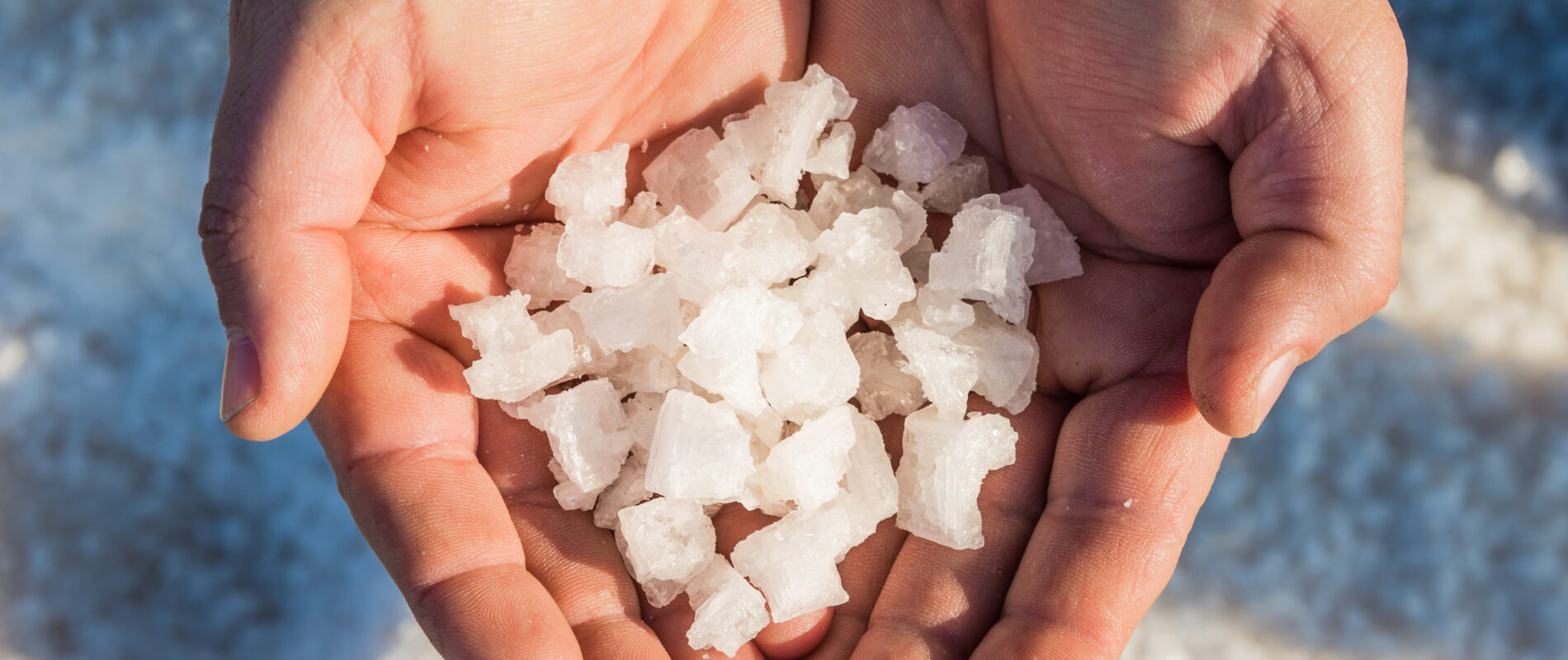
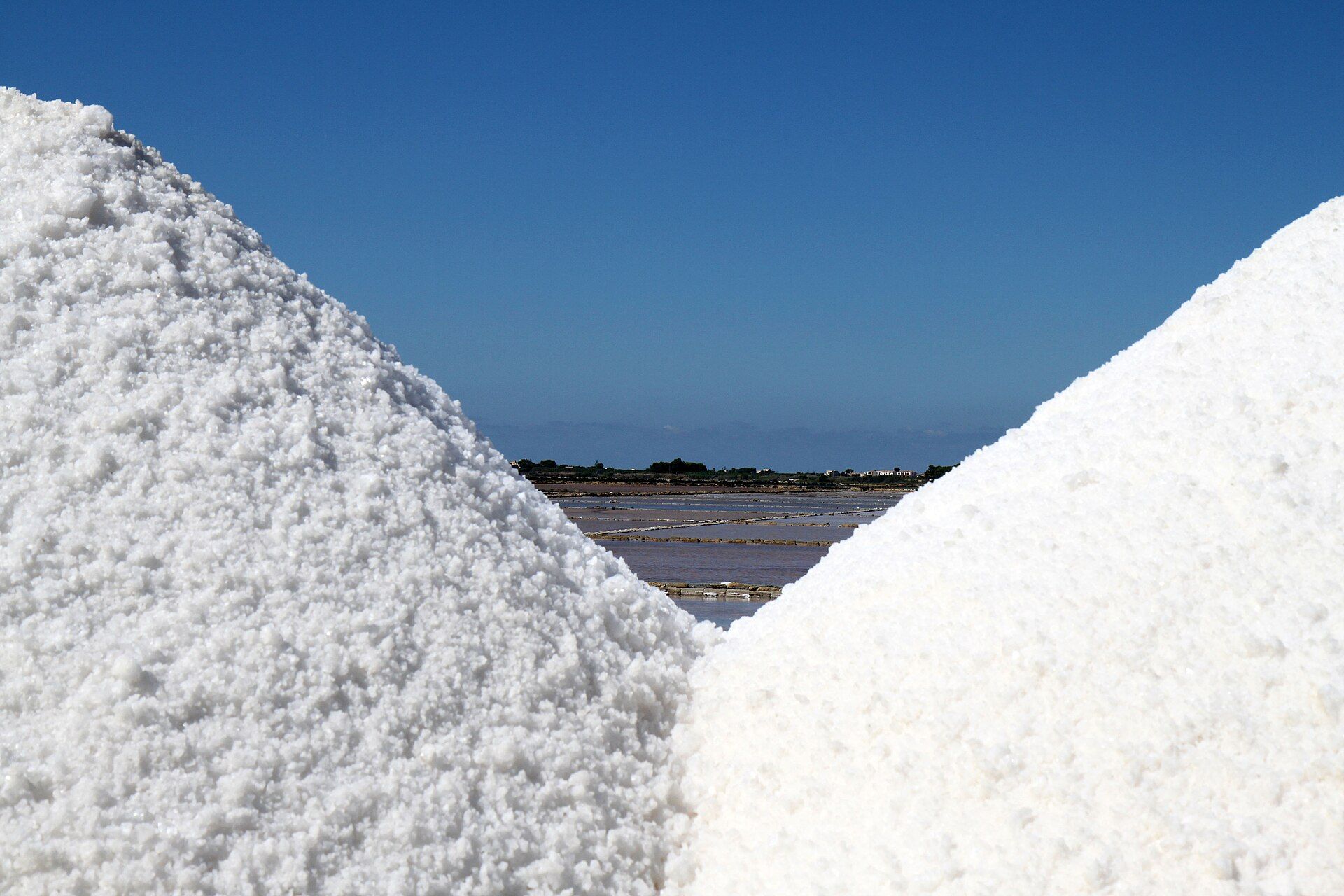
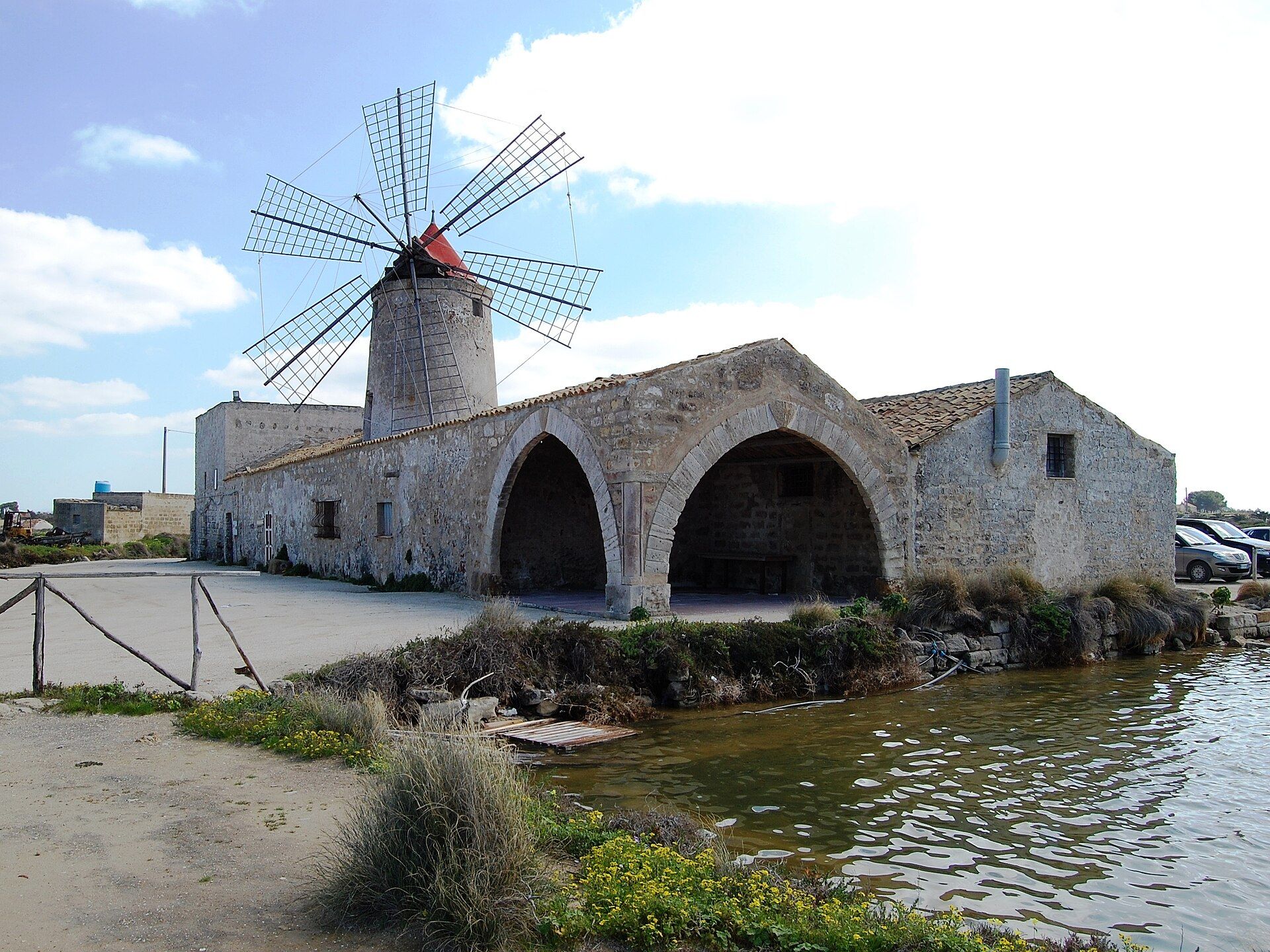
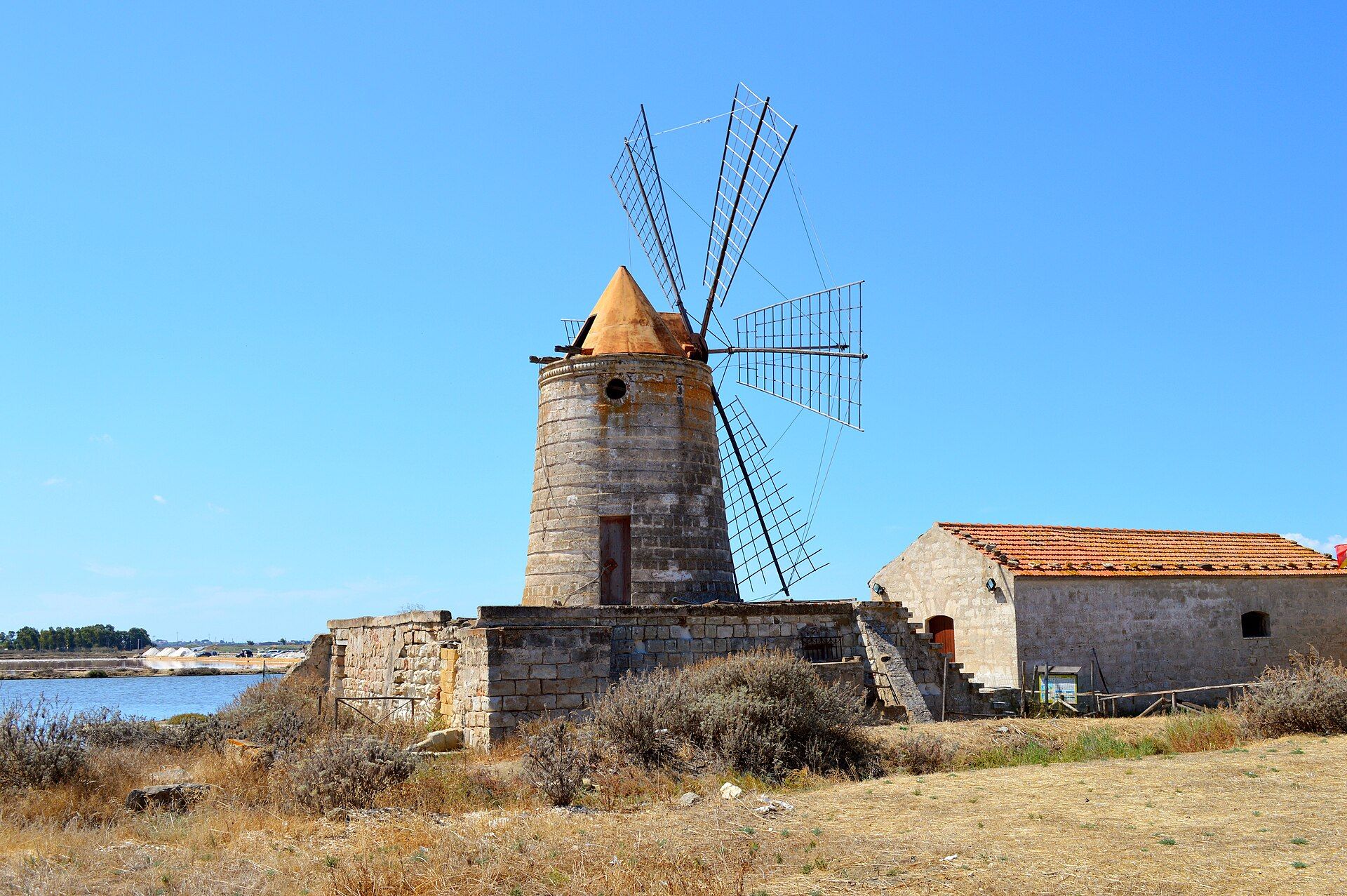
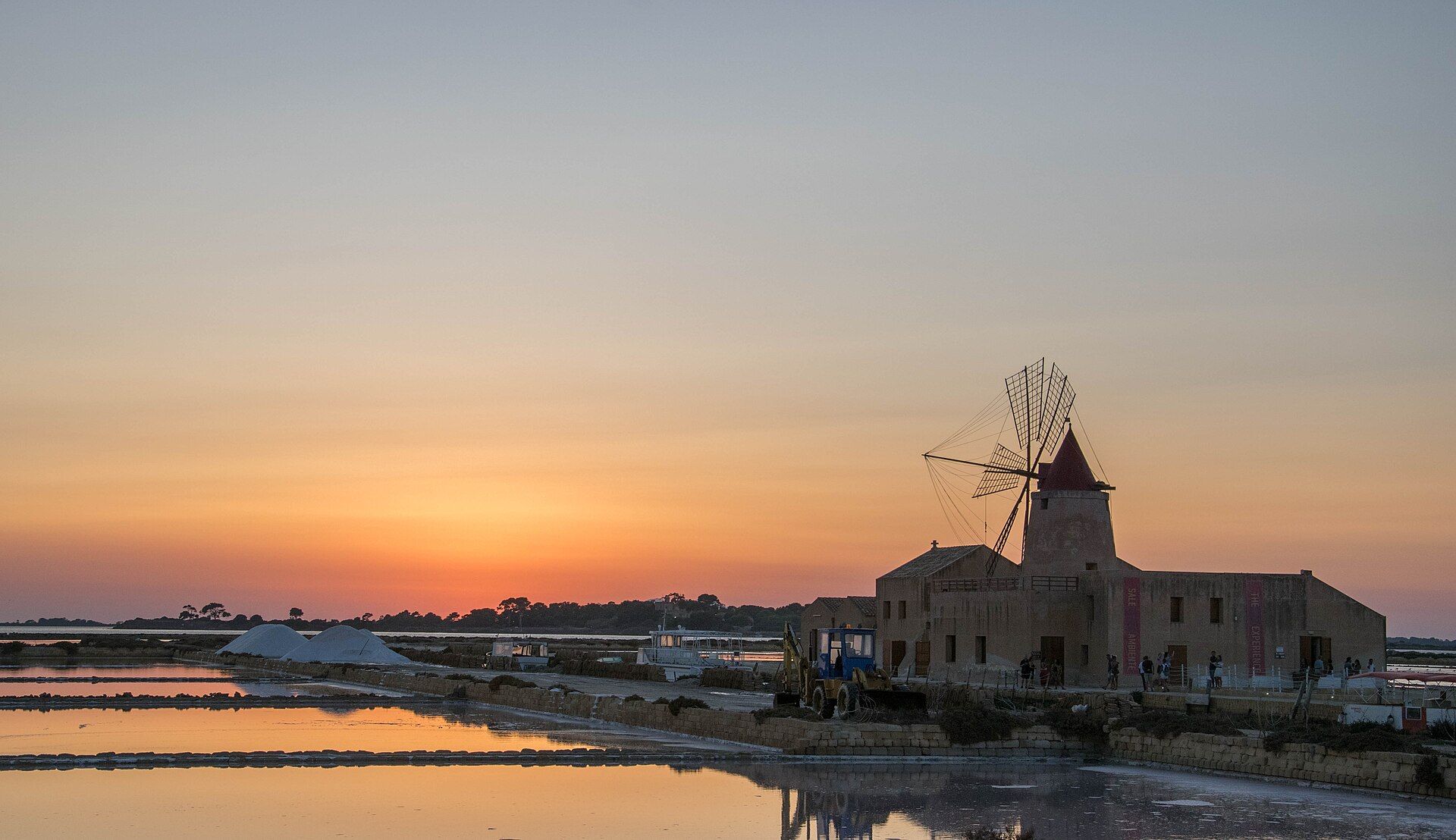
As early as the twelfth century the Arab geographer Al-Idrisi described these salt pans as a treasure of the Trapani coast. Since then, for almost a thousand years, wind, sun and the shallow sea have worked together with people to turn a strip of coast into a unique landscape: geometric pans that change colour at every hour of the day, windmills that once ground salt or lifted water from one pan to another, white mounds that look like snow under the July sun.
In Nubia, the Culcasi family keeps this memory in an old windmill turned into a museum, where every tool — the spira, the wooden tagghie, the ruzzoli — tells of a trade made of patience and respect for the rhythms of nature. Not far away, the WWF has managed since 1995 one of the most important wetlands in Europe, where the private salt pans keep producing salt alongside pink flamingos and the hundreds of migratory species that find refuge here: production and conservation here are not in conflict but have lived together for thirty years.
The journey ends in Marsala, where the Ettore e Infersa Salt Pans offer the most photographed scene of the whole western coast: the windmill still working, the island of Mozia that seems to float among the pans, and a sunset that tints the salt pink before it turns white in the hands of the salt workers. Following this itinerary means letting yourself be slowed down by the rhythm of a landscape in no hurry, which for centuries has given western Sicily one of its most precious products.