Place of interest
Baroque and Barocchetto Churches in the Trapani Style
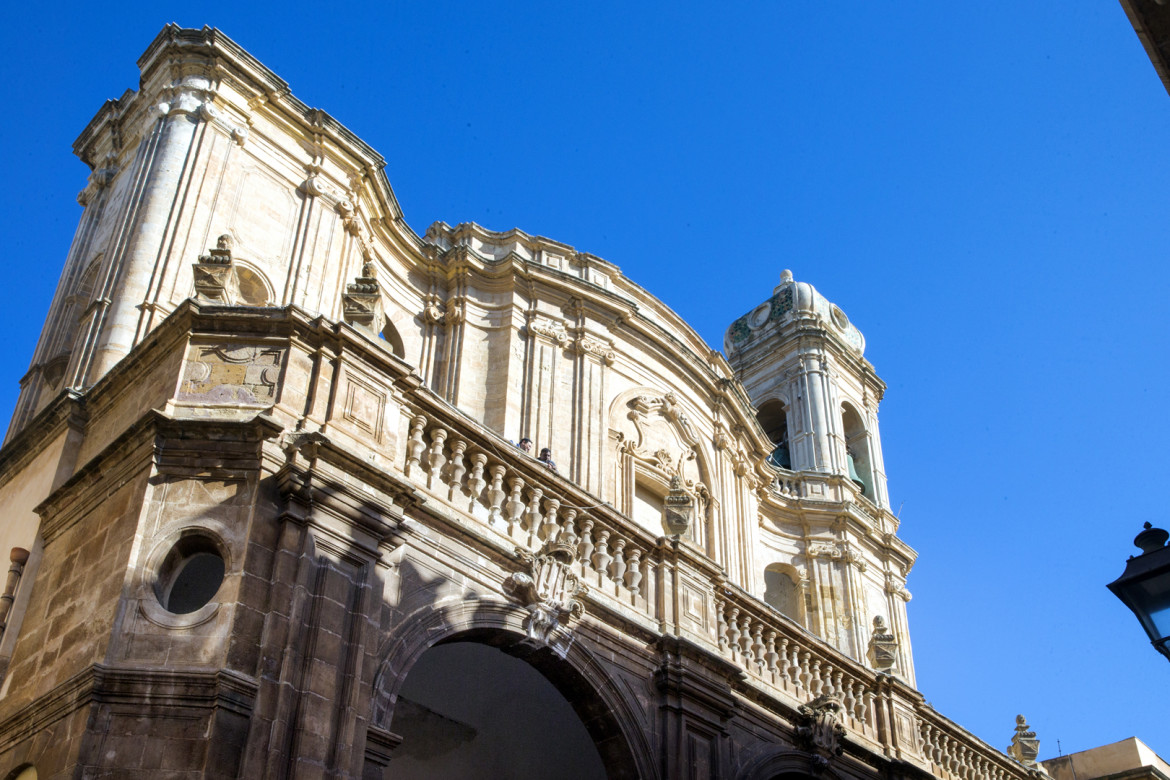
In the seventeenth century Trapani kept its loyalty to the Kingdom of Spain. While in Rome the formal solutions of great Baroque art were being defined, our city, after a stay in the late forms of sixteenth-century classicism or Mannerism, as in the church and college of the Jesuits, turned towards a chromatic, Spanish-style interpretation of Baroque taste in which tonal colour prevailed over plastic effects…
Trapani
The place
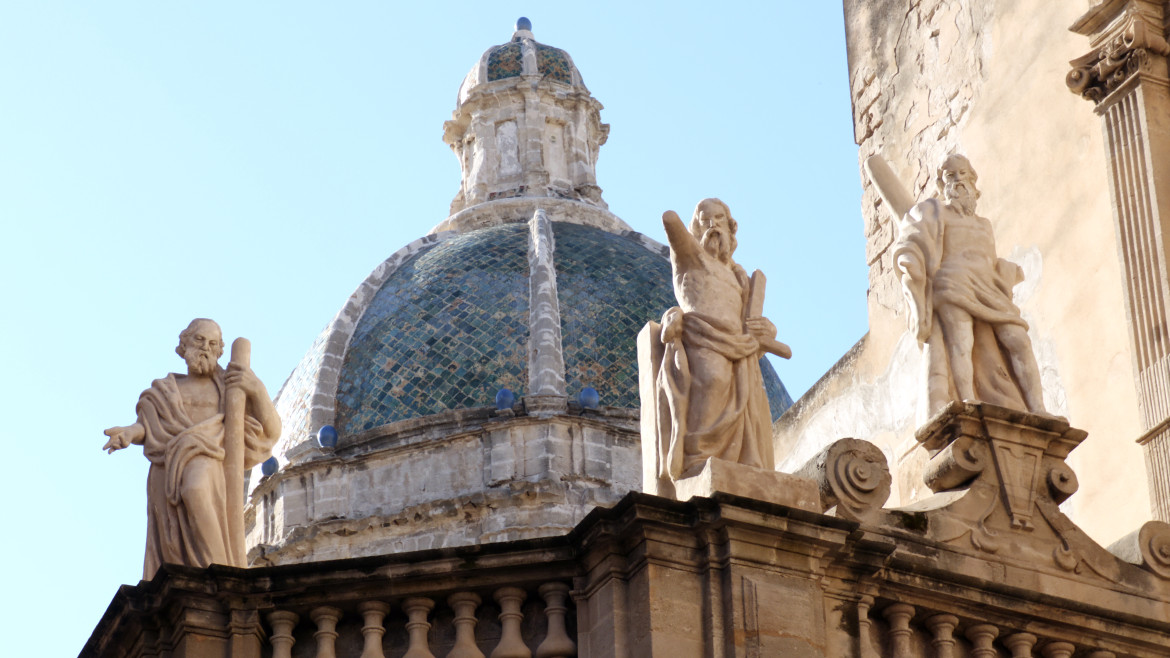
In the seventeenth century Trapani kept its loyalty to the Kingdom of Spain. While in Rome the formal solutions of great Baroque art were being defined, our city, after a stay in the late forms of sixteenth-century classicism or Mannerism, as in the church and college of the Jesuits, turned towards a chromatic, Spanish-style interpretation of Baroque taste in which tonal colour prevailed over plastic effects.
Polychrome marble inlays in the altars, carvings and twisted columns, chiaroscuro modulations made with the alternation of solids and voids, are the characteristic elements of the architecture.
The interior of the church of the Soccorso, better known as Badia Nuova, and the portal of the church of the Carminello tend towards these effects.
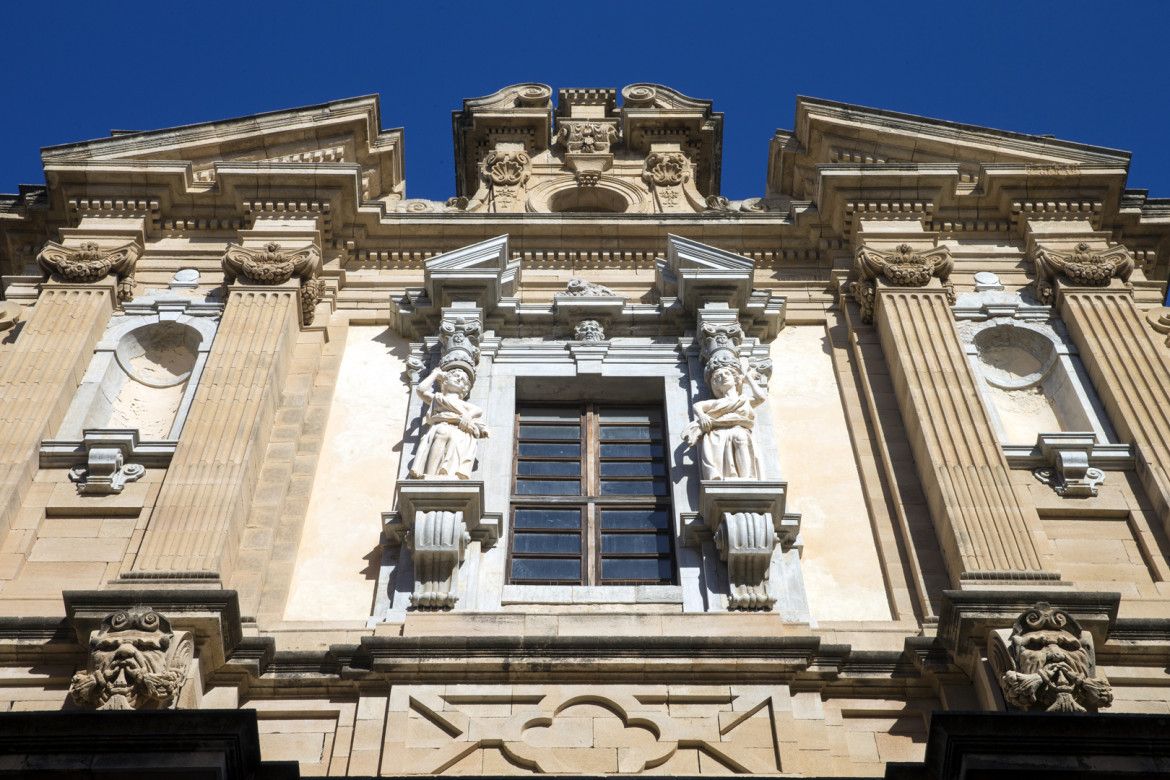
Between the end of the 1600s and the early 1700s, Trapani architecture moved towards a more Baroque vision in which the architectural members and chiaroscuro define the plastic value of surfaces.
Examples are the façades of the church of the Itria and of the Palazzo Senatorio.
The Trapani middle class and nobility, together with the various religious orders – Dominicans, Franciscans, Augustinians – built at the same time palaces, churches and convents in line with the taste and ways of the time.
It was Giovanni Biagio Amico who brought Trapani architecture into the “Borrominian” Baroque climate, giving in the early eighteenth century a personal interpretation of the Baroque style, developing on surfaces solutions of dynamic plasticity.
Expressions of Amico’s manner are the façades of the churches of San Lorenzo and of the Purgatorio: “Borrominian” the first, a tower façade, the other one in which the upward thrust and development in height are combined with the horizontal movement of the broken curve.
Some Trapani families were responsible for the construction of palaces and sumptuous residences in the so-called barocchetto taste, that is a Baroque more oriented towards ornamental and decorative interests than original compositional solutions. A rich profusion of carvings and decorations characterises the window and balcony frames of the palaces Berardo Ferro, Milo della Salina and Lombardo: a linear-barocchetto taste is instead found in some portals and in the residences of Alessandro Ferro and Annibale Fardella.