Place of interest
Historic Centre and Old Quarters
The historic centre of Trapani, in the general picture of the history of Sicily, is an outstanding place for culture and traditions, the image of a historical, social and economic reality that has changed over time.
Trapani
The place
The historic centre of Trapani, in the general picture of the history of Sicily, is an outstanding place for culture and traditions, the image of a historical, social and economic reality that has changed over time.
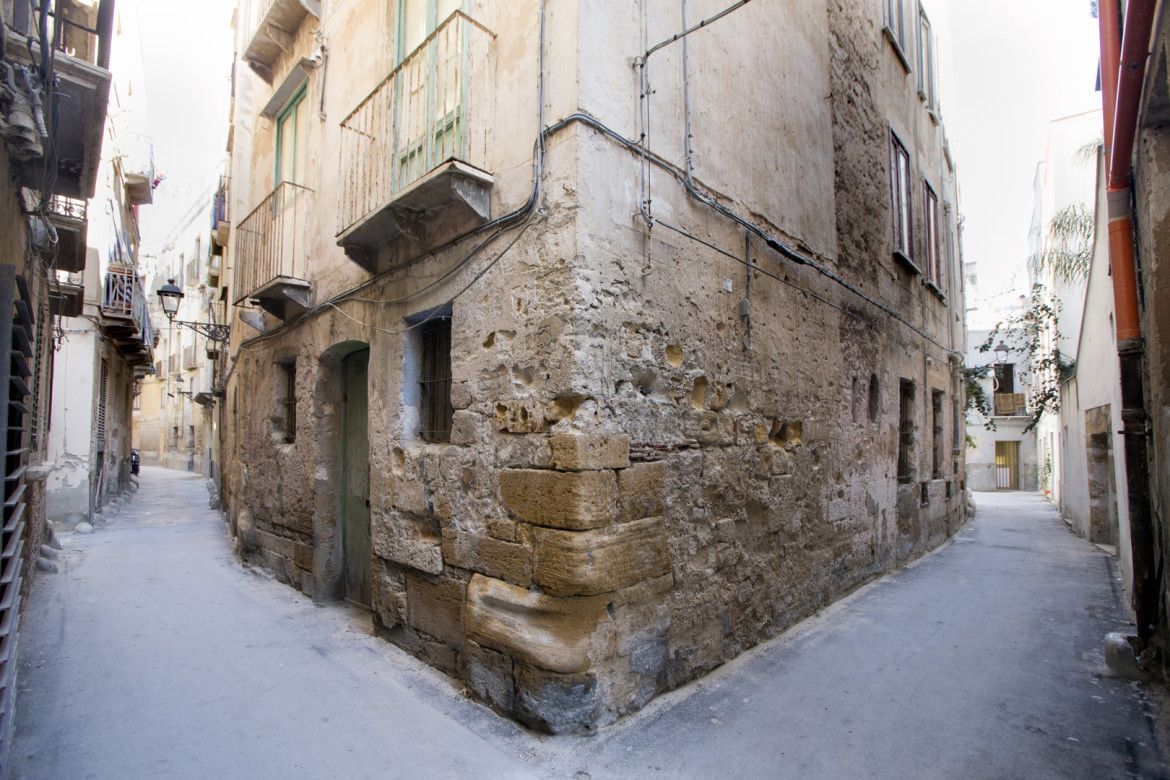
The oldest quarter of the city, called Casalicchio, which originally developed near the port and the church of San Pietro, included the districts of the Giudecca — where the Jewish community lived — and of the Biscottari, currently corresponding to the area between Via Ammiraglio Staiti, Via XXX Gennaio, Via Mercè and Piazza Scarlatti.
Among the narrow, winding streets Galvano, Catito, Sant’Eligio and Mercè are the old Mediterranean-type houses, characterised by the inner courtyard, derived from the Roman peristylium and the Arab court where the life of a community bound by family or professional ties took place: the access to the courtyard is delimited and separated from the street by an arch that leads into the skifa, a narrow, doorless entrance hall covered by a barrel vault or a wooden floor, with clear Islamic references.
Well cisterns and pile (hand-washing basins carved from a single block of stone) are always present in the courtyards, as is the staircase giving access to the upper floor.
The quarter called “di mezzo” (middle) to indicate its position between the older Casalicchio and the Rua Nuova (today’s Via Garibaldi), built in 1286 during the works to extend the city northwards ordered by James of Aragon, corresponds to today’s San Nicola district.
In this quarter are the oldest architectural testimonies in the historic centre, tied to the Flamboyant Gothic taste of the Chiaramonte family who, together with a few families, held power on the island: the churches of San Domenico and Sant’Agostino and the Palazzo Chiaramonte, in Via Sette Dolori, of which a portal, three mullioned windows and a three-light window remain.
The quarter called Palazzo developed following the urban reorganisation ordered by James of Aragon at the end of the thirteenth century, which also involved extending the city by filling in the marshy area to the west, characterised by various islets and rocks: its main axis was the Rua Grande (today’s Corso Vittorio Emanuele). The name, according to some historians, is due to the presence of elegant palaces, according to others to a quarry owned by Pietro Palazzo, from which in the seventeenth century a prized stone, variously used in architecture, was extracted. Today it includes the western part of the historic centre with the districts of San Lorenzo and San Francesco.
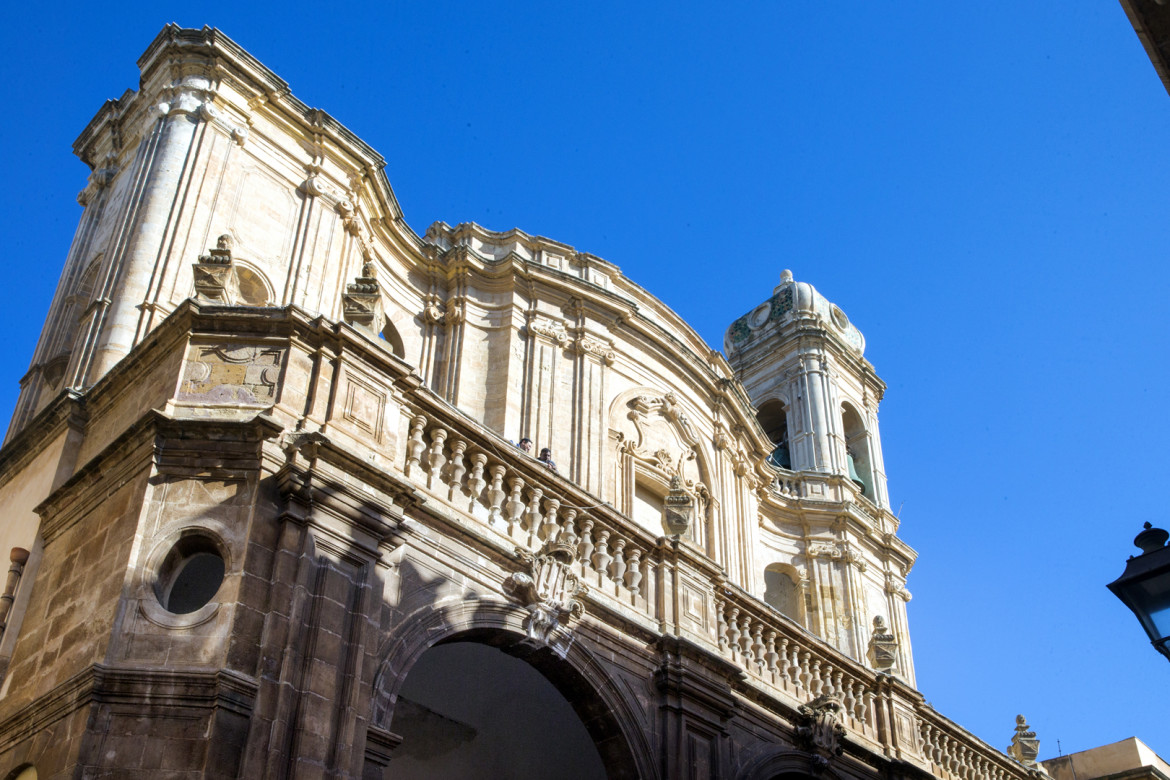
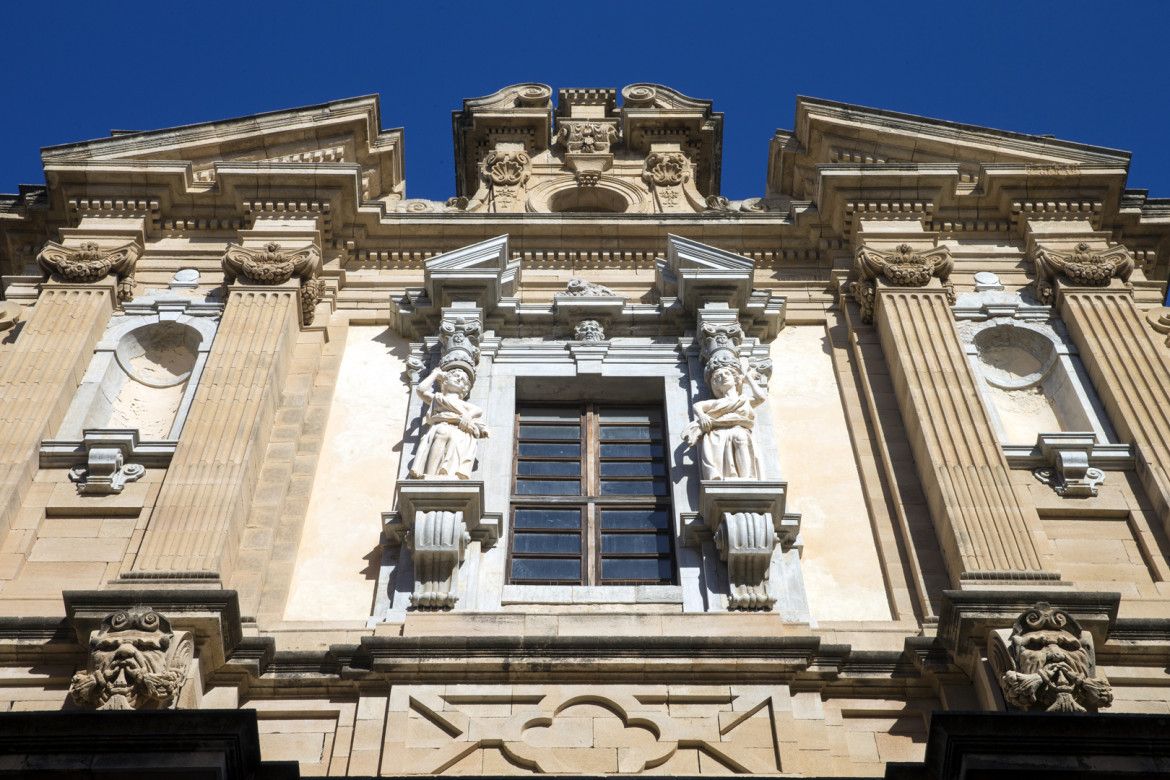
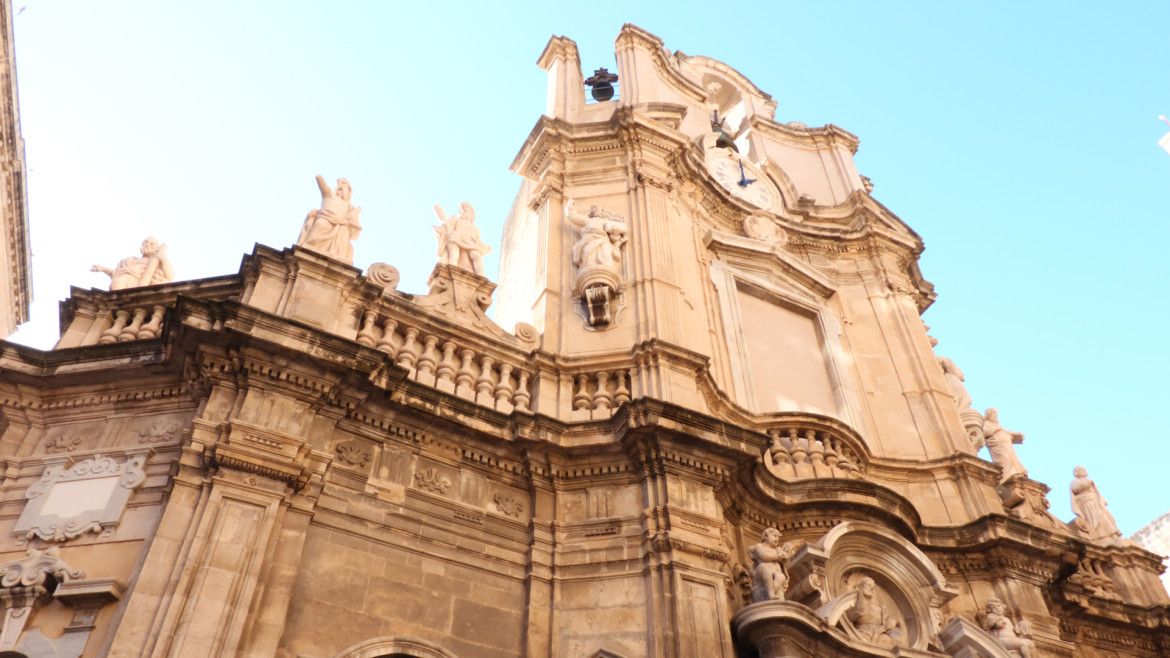
Onto the Rua Grande face churches and palaces of the seventeenth and eighteenth centuries: from the late-Mannerist façade of the Jesuit College church to the “Borrominian” one of the cathedral of San Lorenzo; from the front of Palazzo Riccio di San Gioacchino to that of Palazzo Berardo Ferro. The domes of San Lorenzo, of the Purgatorio and of San Francesco d’Assisi also stand out.