Place of interest
Cathedral of San Lorenzo
The cathedral church of San Lorenzo has very ancient origins that go back to the year 1102; renewed in the first half of the fourteenth century, it was raised to a parish by Alfonso the Magnanimous in 1421. In the seventeenth century it was enlarged by Brother Bonaventura Certo and in 1748 took on…
Trapani
The place
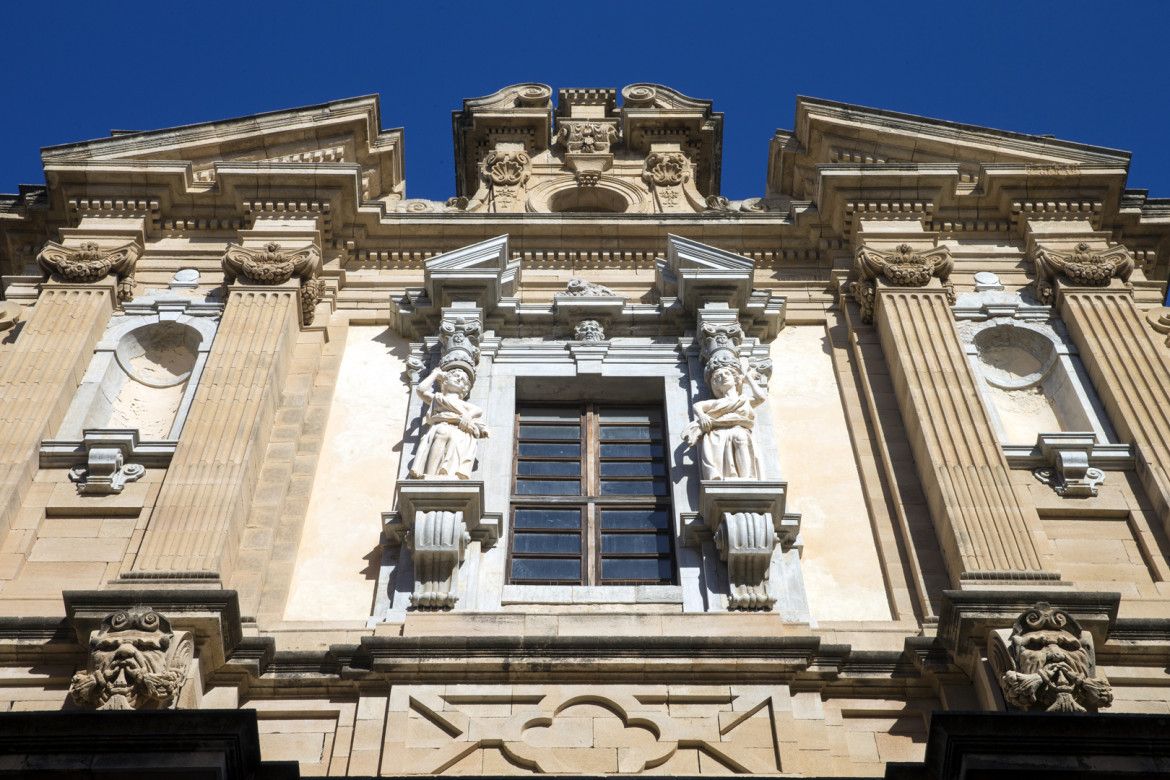
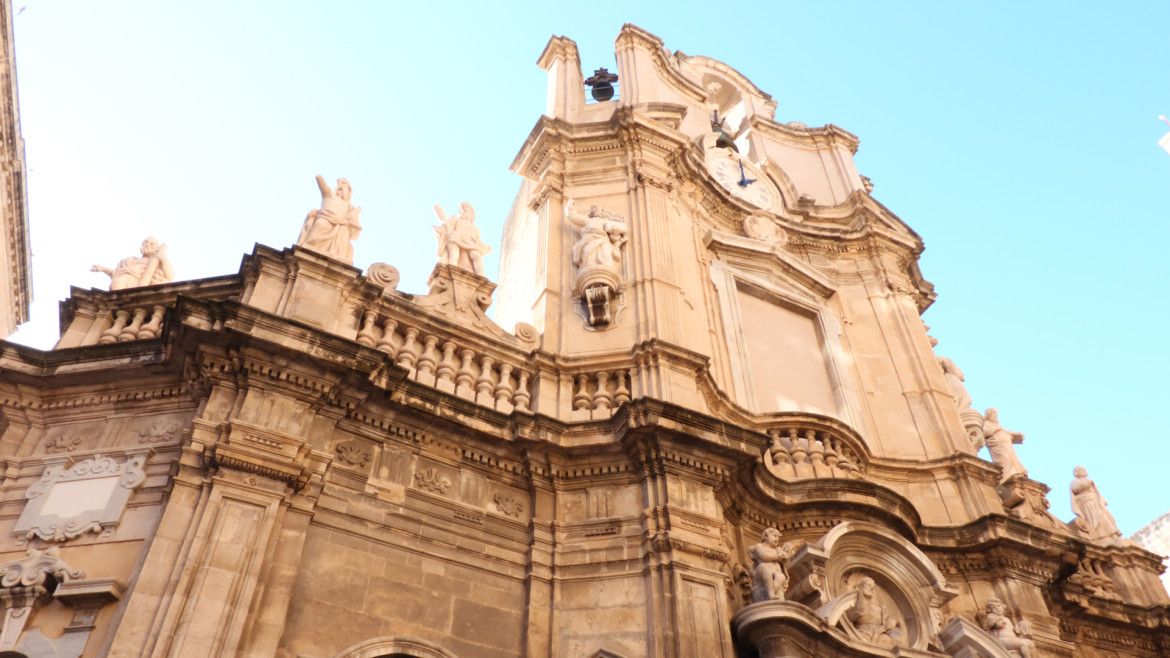
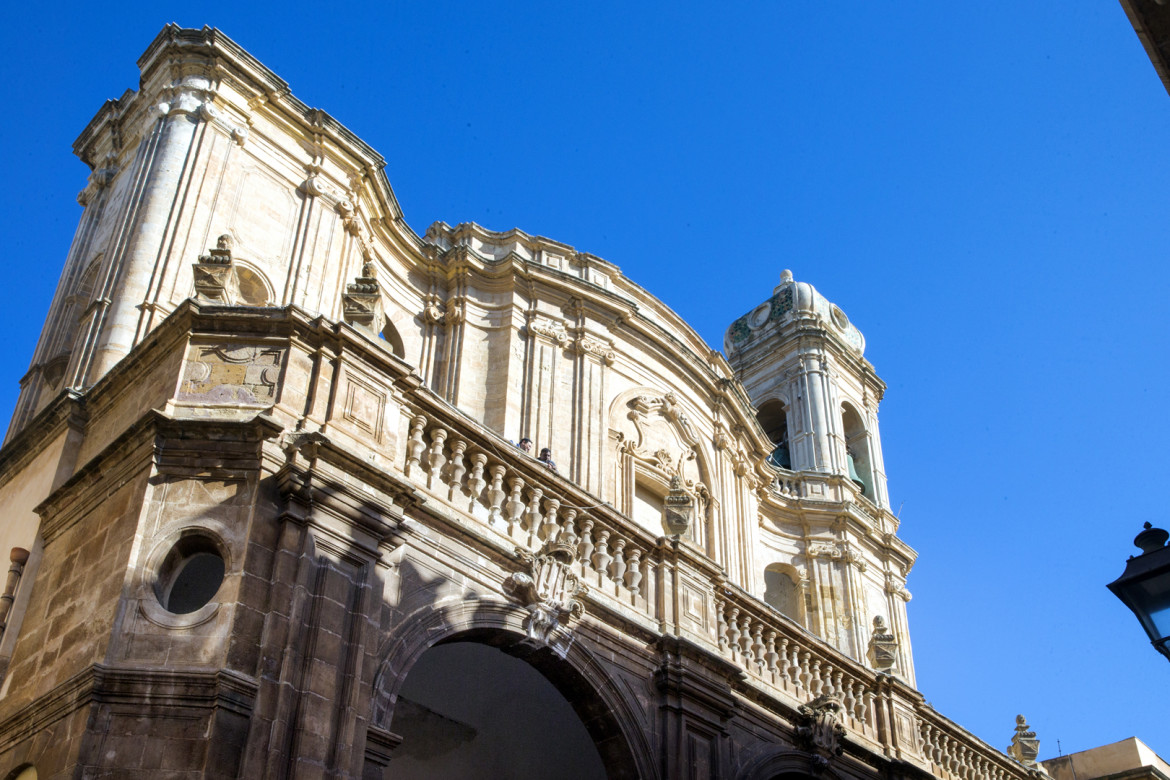
The cathedral church of San Lorenzo has very ancient origins that go back to the year 1102; renewed in the first half of the fourteenth century, it was raised to a parish by Alfonso the Magnanimous in 1421. In the seventeenth century it was enlarged by Brother Bonaventura Certo and in 1748 took on its present appearance thanks to the architect Giovanni Biagio Amico, who designed the side chapels next to the apse, the choir, the dome, the bell tower and the façade.
The façade has two orders, the first occupied by a portico with three large round arches, the second, set back, has a convex line in the central part and a concave one in the two side wings.
The exterior of the building is completed by the slender dome, flanked by four small turrets that resemble buttresses.
Inside, the church has a basilica plan with three naves, divided by rows of columns in Sicilian jasper, and a transept: the whole has a severe Mannerist-Baroque layout. In the central nave there are Neoclassical stuccoes by the Palermo artists Girolamo Rizzo and Onofrio Noto; the barrel-vault frescoes are by Vincenzo Manno (1796-1802).
Among the works kept there are: a Crucifixion of doubtful attribution to the Fleming Van Dyck, a God the Father and a Stoning of Saint Stephen by Domenico La Bruna, a canvas depicting Saint George by the Trapani painter Andrea Carreca (left nave), and paintings by Giuseppe Felice depicting Saint Anthony of Padua, Saint Christopher and the Martyrdom of Saint Lawrence.
Special mention deserves the “Dead Christ” (18th century) made in “incarnata” stone by Giacomo Tartaglio, kept under the altar of the Sacrament in the right apse.
The so-called “incarnata” stone is a particular type of beige-pink alabaster, with shades ranging from grey to black and red-brown, taken from a quarry located in the municipality of Valderice, near the Casalbianco district.
A marble bas-relief by Giuseppe Nolfo, depicting the Nativity (18th century), is also kept in the narthex.