Place of interest
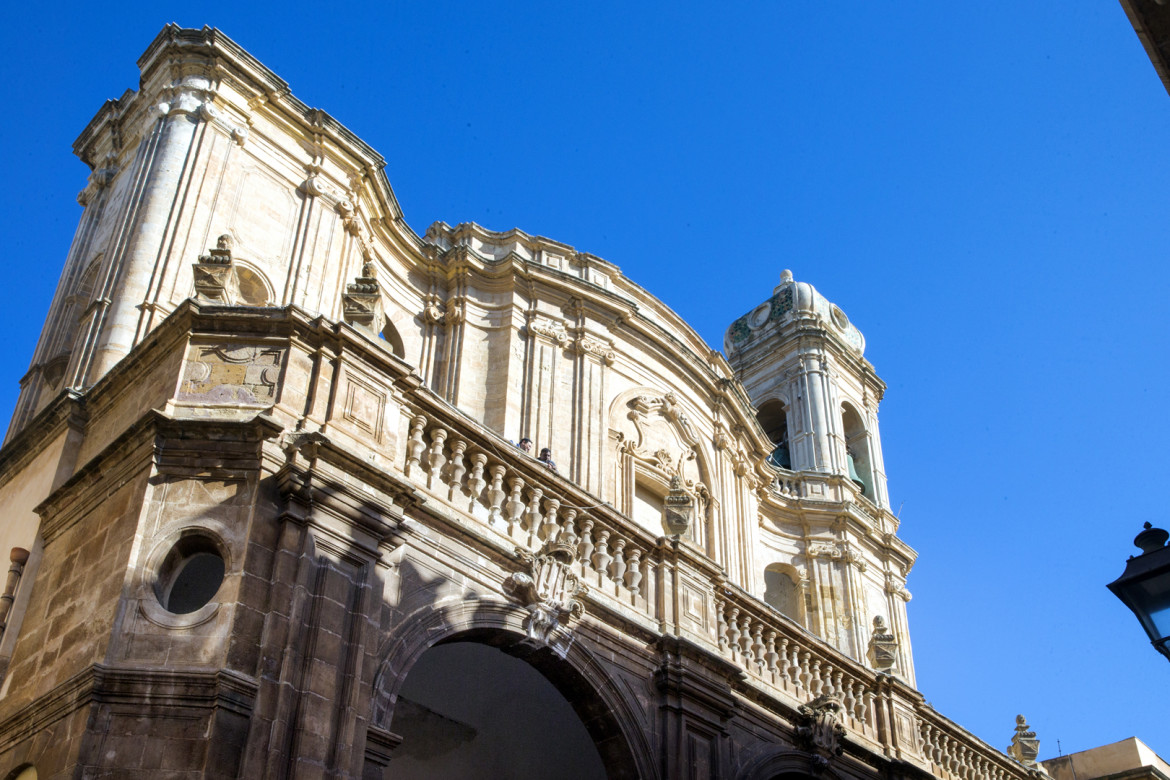
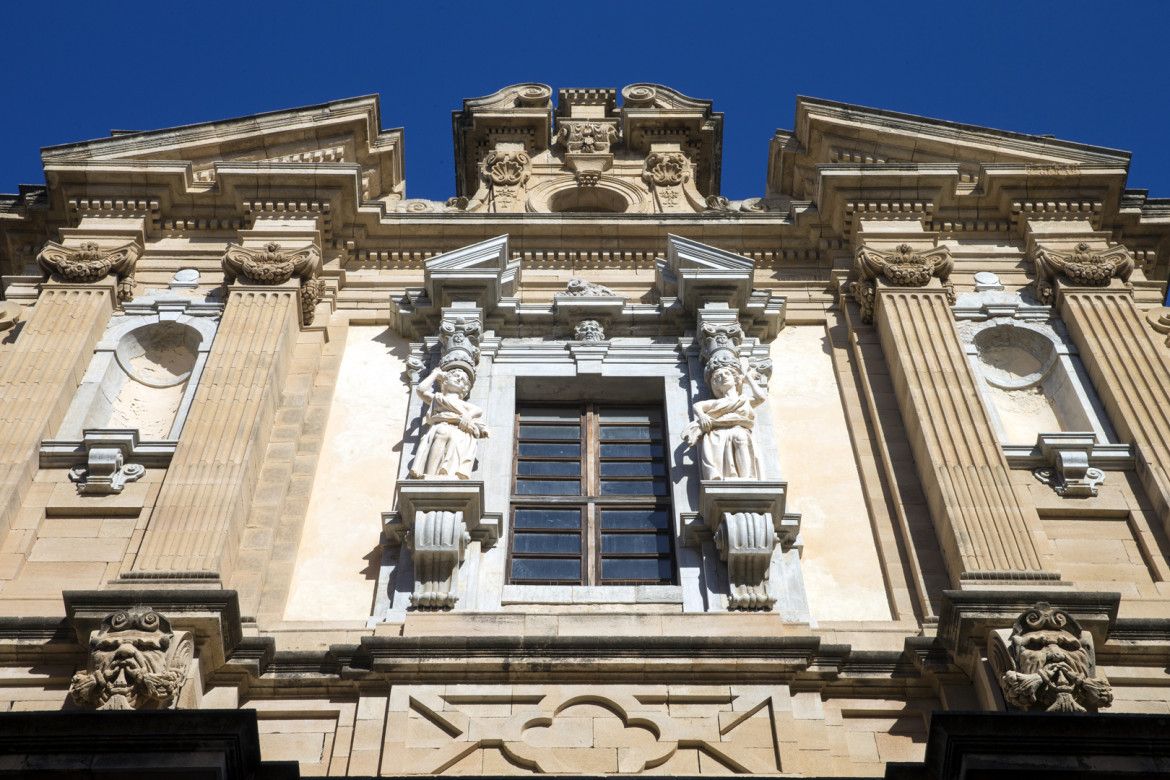
Church and Convent of San Domenico
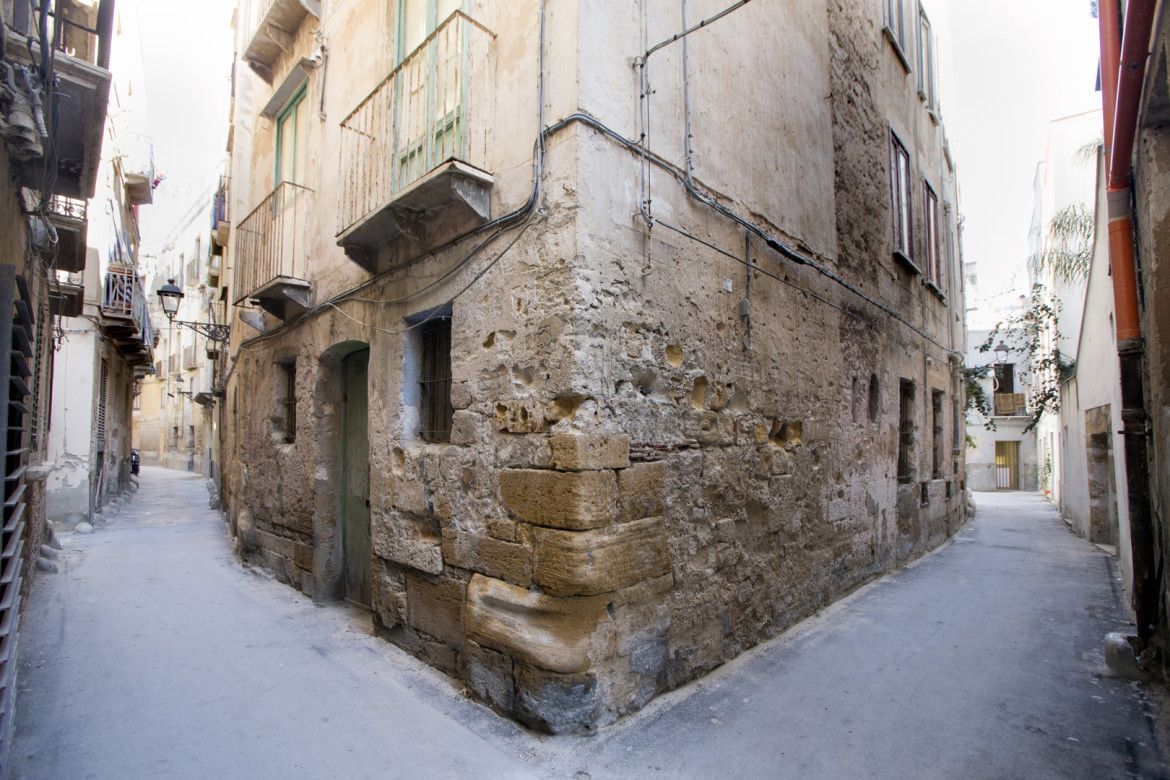
The Dominicans, who arrived in Trapani in the early thirteenth century (about 1221-1229), initially settled in the Jewish quarter, in the church of the Gesù (near the Plaque of the 40 Hours).
Trapani
The place
The Dominicans, who arrived in Trapani in the early thirteenth century (about 1221-1229), initially settled in the Jewish quarter, in the church of the Gesù (near the Plaque of the 40 Hours).
In 1289 King James of Aragon granted them the highest hill of the city where the chapel of Santa Maria Vergine stood, which the Dominicans enlarged and restructured, naming it Santa Maria La Nova; in the same period they began the construction of the adjoining convent.
Of the original chapel there remains a Byzantine-style fresco (to the right of the entrance) depicting the Madonna of the Milk.
In the early 1400s the octagonal bell tower, reinforced at the corners, was built; inside it is a characteristic helical sandstone staircase.
In the 1500s the church was dedicated to Saint Dominic and declared a Royal Chapel: in fact in 1318 Manfred, son of Frederick III of Aragon, who died falling from a horse, was buried there; it is believed that a chapel, also called the Chapel of the Crusaders, was dedicated to him, placed behind the apse, decorated with frescoes still partly visible depicting a Crucifixion, of fourteenth-century workmanship, Saint Dominic, Saint Lucy and Saint Catherine (14th-15th centuries).
The whole complex underwent between 1600 and 1700 a series of restorations that kept the structural layout but transformed the original interior appearance, with the insertion of plasters and stuccoes; the two cloisters and the convent rooms were also reworked.
During the eighteenth-century restorations the Chapel of the Crucifix was added, designed by Giovanni Biagio Amico, to house the wooden statue of the sorrowful Gothic Crucifix of the fourteenth century.
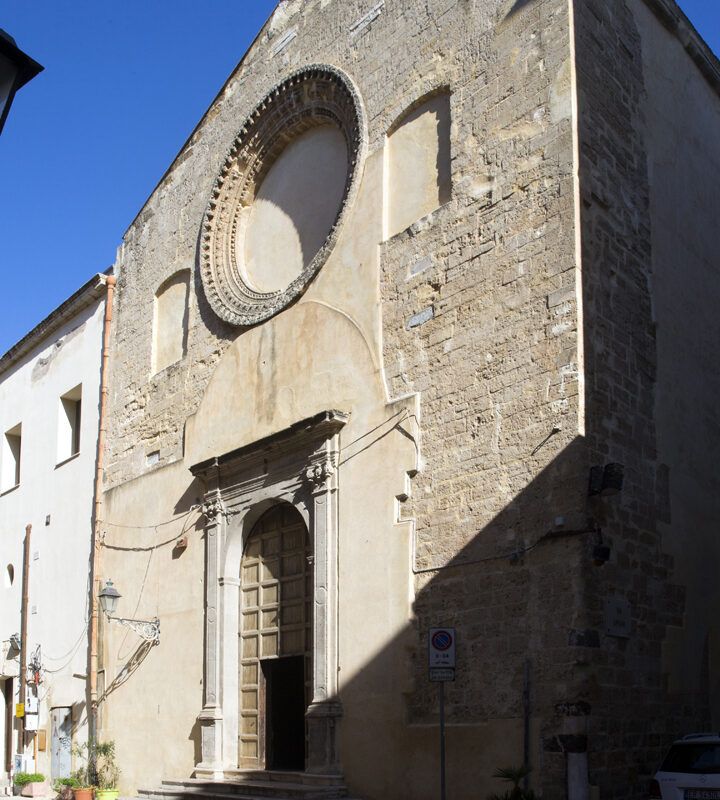
Few remains of the fourteenth-century church survive: the Gothic-Chiaramonte rose window with carved, floral, plant and zig-zag decorations, the apse polygonal on the outside and circular on the inside, the single-light windows on the south side.
Inside are preserved numerous works by local artists: a wood, cloth and glue sculpture of Saint Vincent Ferrer by Mario Ciotta (17th century), a silver tabernacle (1790), a painting depicting Saint Peter Martyr by Andrea Carreca (17th century). Also buried there are King Theobald of Navarre and his wife Isabella, who died in 1270 of plague on their return from Tunis.