Place of interest
Sanctuary of the Annunziata
The Sanctuary of Maria SS. Annunziata stands in the Borgo, where in the thirteenth century there was a small church dedicated to Santa Maria Nunziata, donated with the surrounding space to the Carmelite Fathers by the notary Ribaldo after their arrival in Trapani, which took place between 1224 and 1240.
Trapani
The place
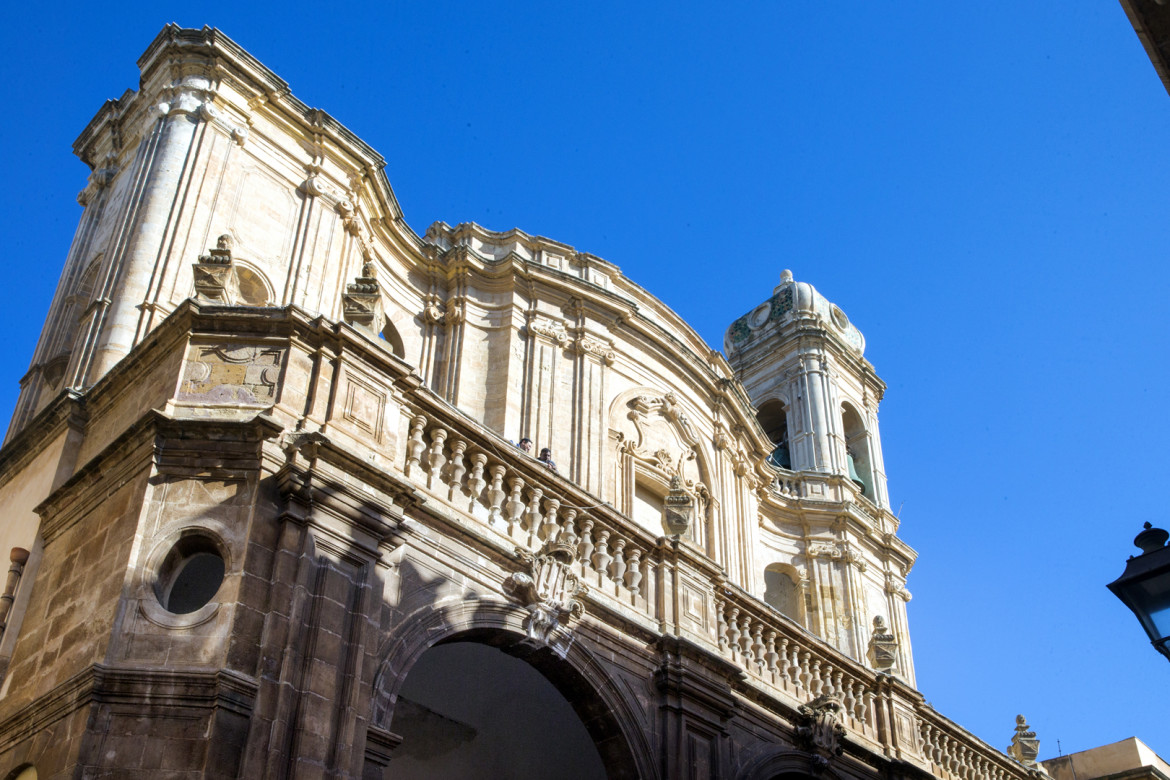
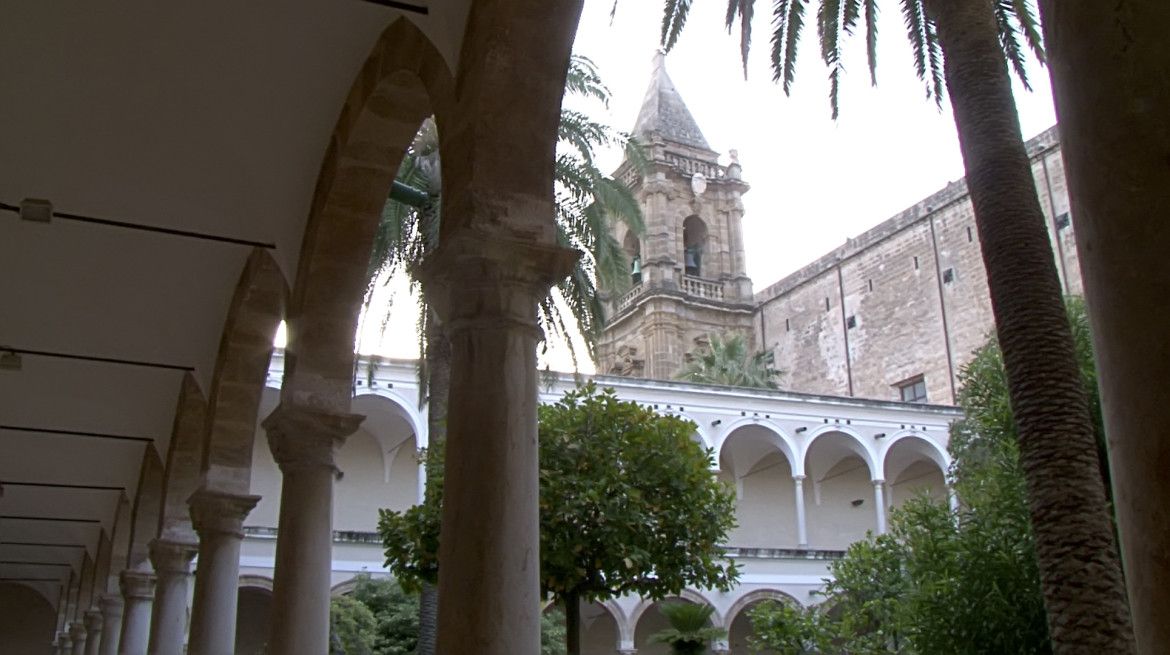
The Sanctuary of Maria SS. Annunziata stands in the Borgo, where in the thirteenth century there was a small church dedicated to Santa Maria Nunziata, donated with the surrounding space to the Carmelite Fathers by the notary Ribaldo after their arrival in Trapani, which took place between 1224 and 1240. The friars turned the little church into a basilica-type building with three naves, in Gothic-Chiaramonte style, with an adjoining convent, completed in 1332; in the eighteenth century the church was turned into a single nave by the Trapani architect Giovanni Biagio Amico.
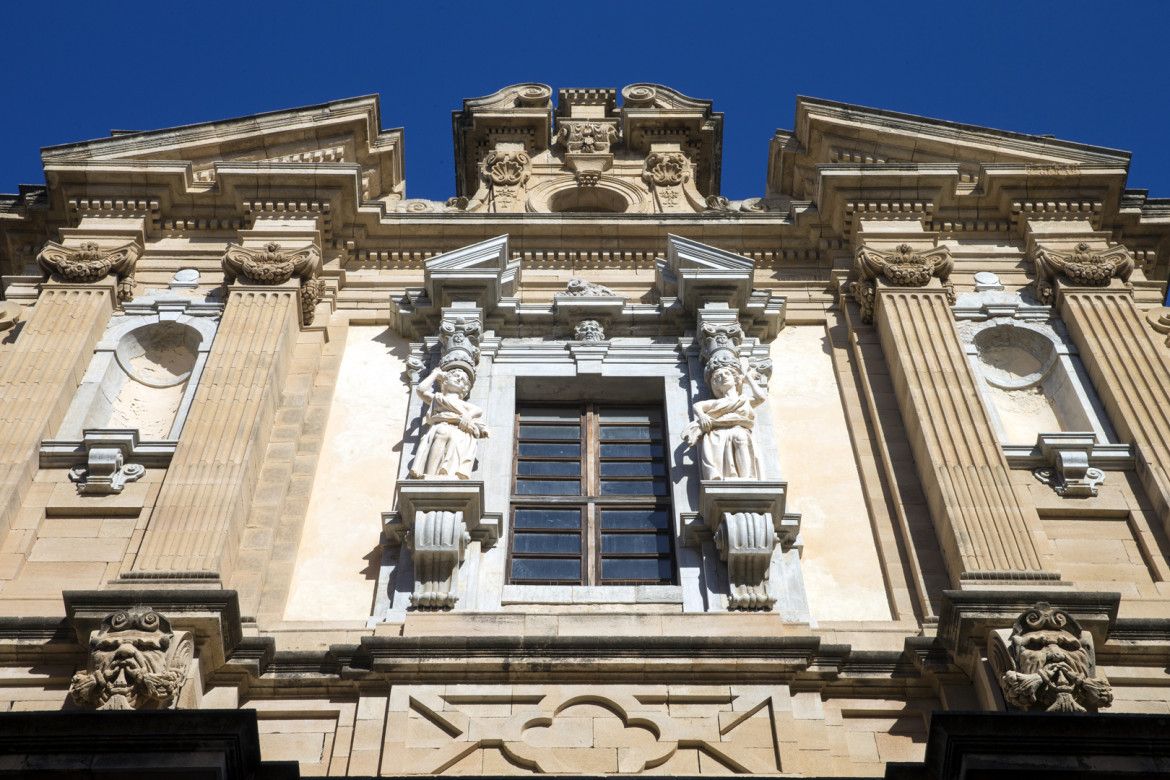
The present façade keeps a fourteenth-century pointed portal with splayed arches, with multiple archivolts decorated with zig-zag elements and small flowers. Above the portal opens a rose window formed by a frame and intertwining concentric arches, traceable to the same Gothic-Chiaramonte style: restored several times, today only a small part is original.
Leaning against the façade is a Baroque bell tower, built in the second half of the seventeenth century by Simone Pisano.
The interior, today a single rectangular nave with a barrel vault, tall columns against the walls and stucco decorations, is the result of the renovation carried out by the architect Giovanni Biagio Amico in 1741 and completed in 1760 by Luciano Gambina.
Of the fourteenth-century building there remain: the ribs of the umbrella vault of the apse, a Gothic mullioned window, and the cross vault of the side apse.
On the right side of the church is the small Fishermen’s chapel (14th-16th centuries): it has a square plan and a roof with an octagonal segmented dome, decorated with sixteenth-century frescoes depicting stories from Genesis. To link the square space to the dome, four pendentives were inserted, formed by splayed arches of Arab taste. On the back wall is a blind pointed portal, richly decorated with marine and Chiaramonte motifs: in some of the archivolts there are zig-zag decorations and four-petalled flowers, while in the outermost one, fish.
The Sailors’ chapel, located at the side of the apse (left side), is one of the most interesting Renaissance buildings of western Sicily, built in the first half of the sixteenth century by the “Consolato degli uomini di Mare”. The chapel has a square base, surmounted by a hemispherical dome. The taste of the ornaments is fully Renaissance, as shown by the architraved frames, the shell motifs and the rope or diamond-point decorations, which recall the Spanish plateresque style.
Two sixteenth-century portals lead into the so-called Madonna chapel, built at the wish of the Bosco Ventimiglia family in the fifteenth century; a marble arch by Antonello and Giacomo Gagini (1537) enriched with the figures of the prophets marks off the space of the single nave from the presbytery area where the fine marble image of the Madonna and Child (14th century), attributed to Nino Pisano, is venerated. The slightly S-shaped pose, typical of Gothic sculpture, the refined workmanship and the gentle gazes of the Madonna and the Child make the statue the most significant example of Gothic sculpture in Sicily. A silver-sheet altar frontal by Trapani craftsmen, donated by Gian Domenico Spinola, bishop of Mazara in 1642, enriches the altar; the eighteenth-century tabernacle, the work of the Trapani artist Vincenzo Bonaiuto, is also silver. At the feet of the Madonna is placed a “model” of the sickle-shaped city of Trapani (also covered in silver) from the end of the seventeenth century.
In the adjoining room is the mixed-marble chapel of Saint Albert, patron of the city, whose image is covered with a silver sheet from the second half of the eighteenth century.